
 By
·
5 minute read
By
·
5 minute read
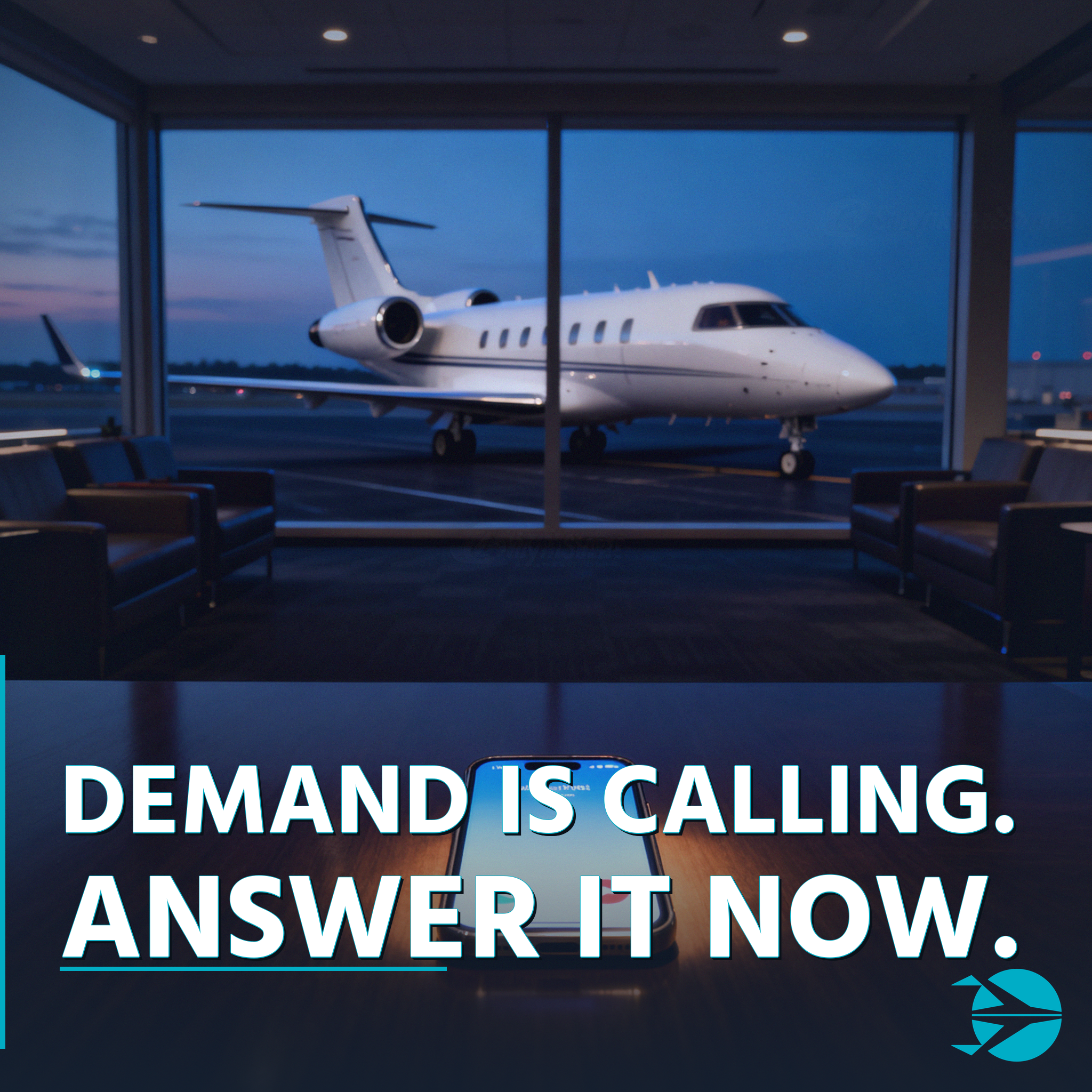
Summer 2026 is shaping up to be the most competitive charter season in recent memory. Demand is up. Margins are tightening. And the operators who are going to walk away with the lion's share of revenue this summer aren't the ones with the biggest fleets or the lowest prices.
They're the ones who never say "No" — because they never have to.
Every "No" your operation delivers this summer — whether it's because you couldn't staff the trip, couldn't get a quote out fast enough, or flat-out didn't know the demand existed — is a five-figure decision. A midsize cabin charter from Miami to the Hamptons on a Friday in July isn't a $10,000 conversation. It's a $50,000 to $80,000 trip that goes to whoever says "Yes" first. And right now, most operators are structured to say "No" without even realizing it.
The cost isn't showing up on your P&L as a line item called "missed revenue." It's showing up as silence. No booking confirmation. No deposit. No trip. Just a prospect who called someone else and found a charter home.
Here's what's driving that silence — and what the operators winning this summer are doing differently.
You're Not Losing on Price. You're Losing on Response Time.
Sarah would tell you this directly: your competitor already sent that quote.
The data backs her up. Operators who respond to a charter inquiry within two minutes win the booking at a rate three times higher than those who respond within the hour. Read that again. Not three times higher than operators who respond the next day — three times higher than operators who respond within sixty minutes.
Think about what your current quote process actually looks like on a Saturday morning in August. A request comes in for a Gulfstream from Teterboro to Nantucket, round-trip, four passengers, departing in 72 hours. Someone on your team has to pull fuel costs, check positioning, confirm crew availability, calculate margin, format the quote, and get it out the door. Best case, that's 45 minutes. Worst case, it's Monday morning.
The prospect made a decision on Saturday afternoon.
One operator running Sentinel's automated quote engine cut their average response time from 47 minutes to under two minutes on standard trip requests. They didn't hire more people. They didn't work weekends. They just stopped letting human processing speed determine whether they won or lost a booking.
First in wins. That's not a philosophy — it's a close rate.
The Staffing Problem Is a Visibility Problem in Disguise
Here's the scenario that plays out more than operators want to admit: A premium trip request comes in — eight passengers, heavy cabin, Los Angeles to Cabo, July 4th weekend. The revenue is there. The aircraft is available. The trip is yours to take.
Except your Chief Pilot can't confirm crew availability until he's made six phone calls, and by the time you have a staffed itinerary, the prospect has already paid a deposit somewhere else.
Max would call this a pattern he's seen before, because it is. Operators don't lose summer peak bookings because they lack aircraft. They lose them because they can't see their own operation clearly enough to say "Yes" fast.
The staffing bottleneck in charter isn't really a staffing problem — it's a visibility problem. When your crew availability, duty time, currency status, and positioning data live in spreadsheets, text threads, and the memory of one or two key people, you're running your operation on a delay. That delay costs you trips.
Real-time crew and aircraft matching changes the equation entirely. When a trip request surfaces, you should know within 30 seconds whether you can staff it, who's available, and what the positioning cost looks like. Sentinel's operations layer cross-references crew availability, flight duty limitations, and aircraft positioning in real time — so the answer your team gives a prospect isn't a guess. It's a confirmed "Yes" in the time it used to take just to open the crew schedule.
One Midwest operator who implemented real-time operations visibility during their 2025 peak season recovered 23 staffable trips in a single month they would have previously declined or delayed past the point of recovery. At an average trip value of $38,000, that's $874,000 in revenue that would have walked out the door.
The Demand You Don't Know About Is the Demand You Can't Chase
This is where most operators' sales strategies have a structural blind spot.
The traditional charter sales model is reactive by design. You wait for the RFQ. The RFQ hits your inbox. You respond. You win or you lose. Repeat.
The problem with that model in a peak demand environment is that you're competing for trips that have already been shopped — trips where the prospect has already set expectations, already started comparing quotes, and already given other operators a head start. You're not hunting. You're scavenging.
The operators who are building real revenue this summer aren't waiting for demand to find them. They're identifying demand signals before the RFQ ever gets written.
Sentinel's proactive demand engine monitors live market signals — event calendars, corporate travel patterns, regional demand spikes, competitive positioning windows — and surfaces charter opportunities before they hit the open market. When a major tech conference books its venue in Austin for a Thursday through Sunday in June, smart operators are already positioning aircraft and reaching out to their network before the first corporate travel manager sends an email blast to three brokers asking for quotes.
The numbers don't lie on this one. Proactive outreach on demand-signal-identified trips closes at a rate 2.4 times higher than reactive RFQ responses — because you're not competing on a level playing field. You're arriving to a conversation before your competitors know it's happening.
Every reactive "No" has a root cause. Some operators say "No" because they can't quote fast enough. Some say "No" because they can't see their own crew availability. But some operators say "No" to trips they never even knew existed. That's the most expensive version of the word.
This Summer, "No" Is a Choice — Not a Constraint
The operators who are going to look back at Summer 2026 as a defining season didn't find more demand. They built the infrastructure to capture the demand that was already there.
The math is straightforward. If your operation passes on five trips per month during peak season because of slow quoting, staffing blind spots, or missed demand signals — and those trips average $55,000 each — that's $275,000 per month in revenue that's going somewhere. It's going to the operator who responded in two minutes. It's going to the operator who already had a crew confirmed when the inquiry came in. It's going to the operator who reached out before the prospect even knew they needed to ask.
Three months of summer. Five trips per month. $55,000 per trip. That's $825,000 in seasonal revenue decided not by your fleet, your rates, or your reputation — but by your response infrastructure.
The operators losing this summer aren't losing because of anything dramatic. There's no single catastrophic failure. They're losing one five-figure trip at a time, to competitors who are running at computer speed while they're running at human speed. And most of them won't see it clearly until Q4, when they're looking at a revenue number that should have been higher.
Sentinel was built for Part 135 operators who are done leaving that revenue on the table. Automated quoting in under two minutes. Real-time crew and aircraft matching. Proactive demand signals that put you in front of trips before they hit the market. This isn't a tool you use occasionally — it's the operating layer that runs underneath every booking decision your team makes.
The demand is there this summer. The question is whether your operation is structured to say "Yes" to it.
Book a 15-minute demo at sentinelcharter.com and see exactly how Sentinel fits into your current operation — not a generic pitch, a specific look at your market, your fleet, and your peak season opportunity.
[Request our operator case study — see the 417% revenue growth breakdown](#)